A cutting board is the most used tool in your kitchen. You use it three times a day, every day. Yet most people use the same warped, scarred plastic board for years without considering how it affects their knives, their food safety, and their cooking experience.
The Three Main Materials
Wood
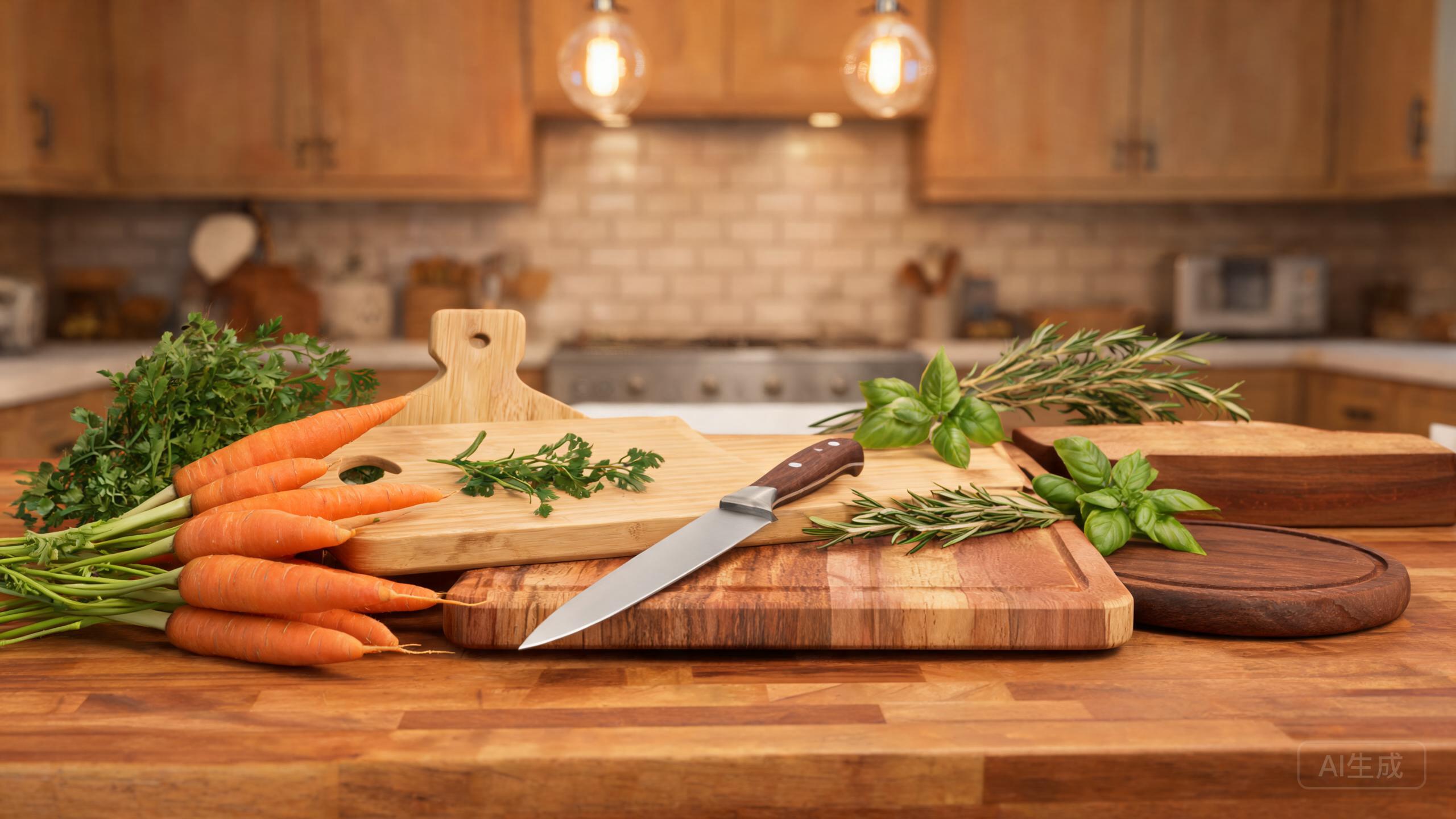
End-grain and edge-grain wood boards are the best surface for your knives. The wood fibers part slightly as the blade strikes, then close back up, which is why wood boards resist deep scratches and last for decades. Hardwoods like maple, walnut, and cherry are ideal.
Wood boards require maintenance: oil them monthly with food-grade mineral oil, and never put them in the dishwasher. With proper care, a good wood board lasts 10 to 20 years.
Bamboo
Bamboo is technically a grass. It is harder than most hardwoods, which means it resists scarring but is harder on your knives. Bamboo is a sustainable choice — it grows rapidly and regenerates without replanting.
Plastic
Plastic boards are dishwasher safe, affordable, and easy to sanitize. However, plastic does not self-heal like wood, so deep grooves develop and can harbor bacteria. Plastic boards should be replaced every 1 to 2 years.
End-Grain vs. Edge-Grain Wood Boards
End-grain boards are made by standing wood pieces upright so the fiber ends face up. This creates the classic checkerboard pattern and is the kindest surface for your knives. Edge-grain boards are made from long strips of wood laid side by side. They are less expensive and still excellent for knives.
Size and Thickness
The ideal board is at least 12 by 18 inches. For everyday prep, a 15 by 20 inch board gives you ample working space. A board at least 1.5 inches thick will not slide around the counter. For carving meats, a board with a juice groove around the edge prevents spills.
Food Safety Best Practices
The single most important rule is using separate boards for raw meat and vegetables. Color-coded plastic boards make this easy — red for meat, green for vegetables, blue for fish, yellow for poultry.
Studies show that wood boards have natural antibacterial properties — bacteria on wood surfaces die off within minutes, while bacteria on plastic boards can survive in knife grooves.
Our Top Recommendations
Best Overall: John Boos Maple Wood Reversible Cutting Board
The professional standard. End-grain hard maple construction, 1.5 inches thick, with a juice groove. This board lasts decades with monthly oiling.
Best Budget: OXO Good Grips Plastic Cutting Board Set
A set of three color-coded plastic boards for under $30. Dishwasher safe, non-slip edges.
Best for Carving: Teakhaus Teak Wood Carving Board
Teak is naturally water-resistant. This board has a deep juice groove and a built-in pour spout.
How to Maintain a Wood Cutting Board
Wipe with a damp cloth and mild soap after use. Never submerge or dishwasher. Once a month, apply food-grade mineral oil and let it absorb overnight. If the board feels rough, sand lightly with 400-grit sandpaper before oiling.
Frequently Asked Questions
Are glass or marble cutting boards good?
No. Glass and stone surfaces dull knives rapidly and create an unpleasant cutting experience. Reserve them for serving, not cutting.
Can I use one cutting board for everything?
You can, but it is not recommended for food safety. Using a separate plastic board for raw meat and a wood board for everything else is the best compromise.