Many people assume that eco-friendly means less effective. In reality, some of the most powerful cleaning agents are plant-based — vinegar, citric acid, enzymes, and plant-derived surfactants can tackle grease, grime, and bacteria without harsh chemical residues.
What Makes a Cleaning Product Eco-Friendly?
Look for biodegradable formulas, plant-derived ingredients, minimal or recyclable packaging, no phosphates, no phthalates, and no artificial dyes. Certifications like EPA Safer Choice, Green Seal, and EWG Verified provide independent verification.
Our Top Eco-Friendly Cleaning Picks
1. Blueland Multi-Surface Cleaner
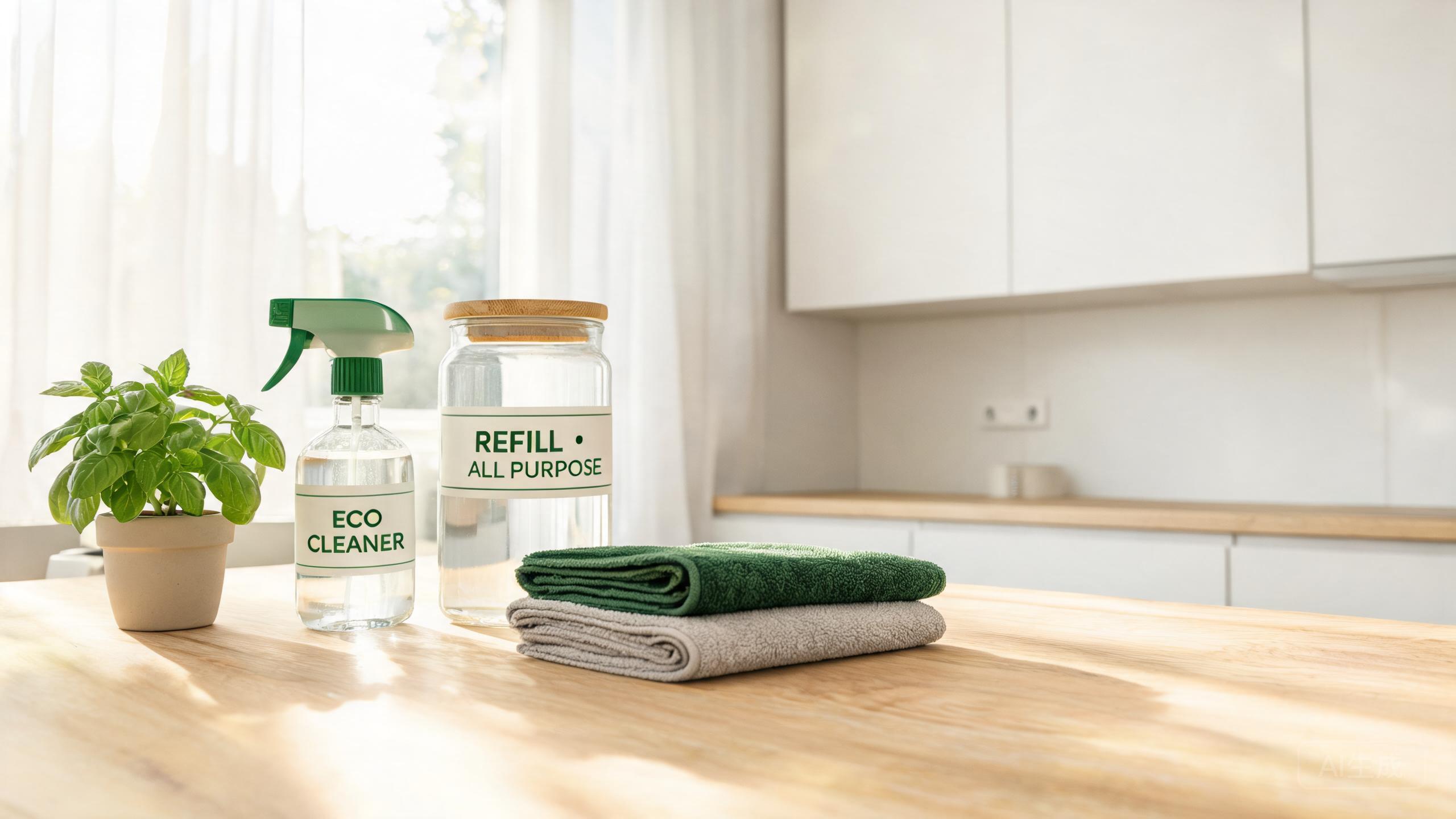
A refillable system that eliminates single-use plastic. Buy the starter kit with a glass bottle and a tablet, then dissolve the tablet in water. Refill tablets cost about $2 each.
2. Branch Basics Concentrate
A single concentrate bottle replaces virtually every cleaner in your home. Plant-based, biodegradable, and safe enough for baby items.
3. Grove Collaborative Dish Soap
Plant-based dish soap with refillable aluminum bottles. Free of phosphates, phthalates, and synthetic fragrances.
4. Ethical Bean Laundry Detergent Sheets
Laundry sheets eliminate the plastic jug entirely. Pre-measured, dissolve in cold water, and weigh almost nothing to ship.
5. Dropps Dishwasher Pods
Phosphate-free, plant-based pods in a dissolvable film. No plastic packaging. Clean effectively in hard water.
6. Common Good All-Purpose Cleaner
Concentrated, plant-based cleaner in refillable glass bottles. Biodegradable and safe for food-contact surfaces.
DIY Eco-Friendly Cleaners
- All-purpose spray: 1 part vinegar, 1 part water, 10 drops essential oil.
- Glass cleaner: 1 part vinegar, 2 parts water, a drop of dish soap.
- Tub and tile scrub: Baking soda and water paste. Add hydrogen peroxide for mildew.
- Wood floor cleaner: 1 gallon warm water, 1/4 cup vinegar, lemon essential oil.
Do not mix vinegar and hydrogen peroxide — the combination creates peracetic acid. Use them separately.
What to Avoid in Conventional Cleaners
- Phosphates: Contribute to water pollution and algal blooms.
- Phthalates: Linked to endocrine disruption.
- Triclosan: Contributes to antibiotic resistance.
- Ammonia: A respiratory irritant. Never mix with bleach.
The Cost Question
Eco-friendly refill systems actually save money over time. A Blueland tablet costs about $2 per bottle, compared to $4 to $5 for conventional refills. DIY cleaners from vinegar and baking soda are the cheapest option — a gallon of vinegar costs about $3 and makes 16 bottles of all-purpose cleaner.