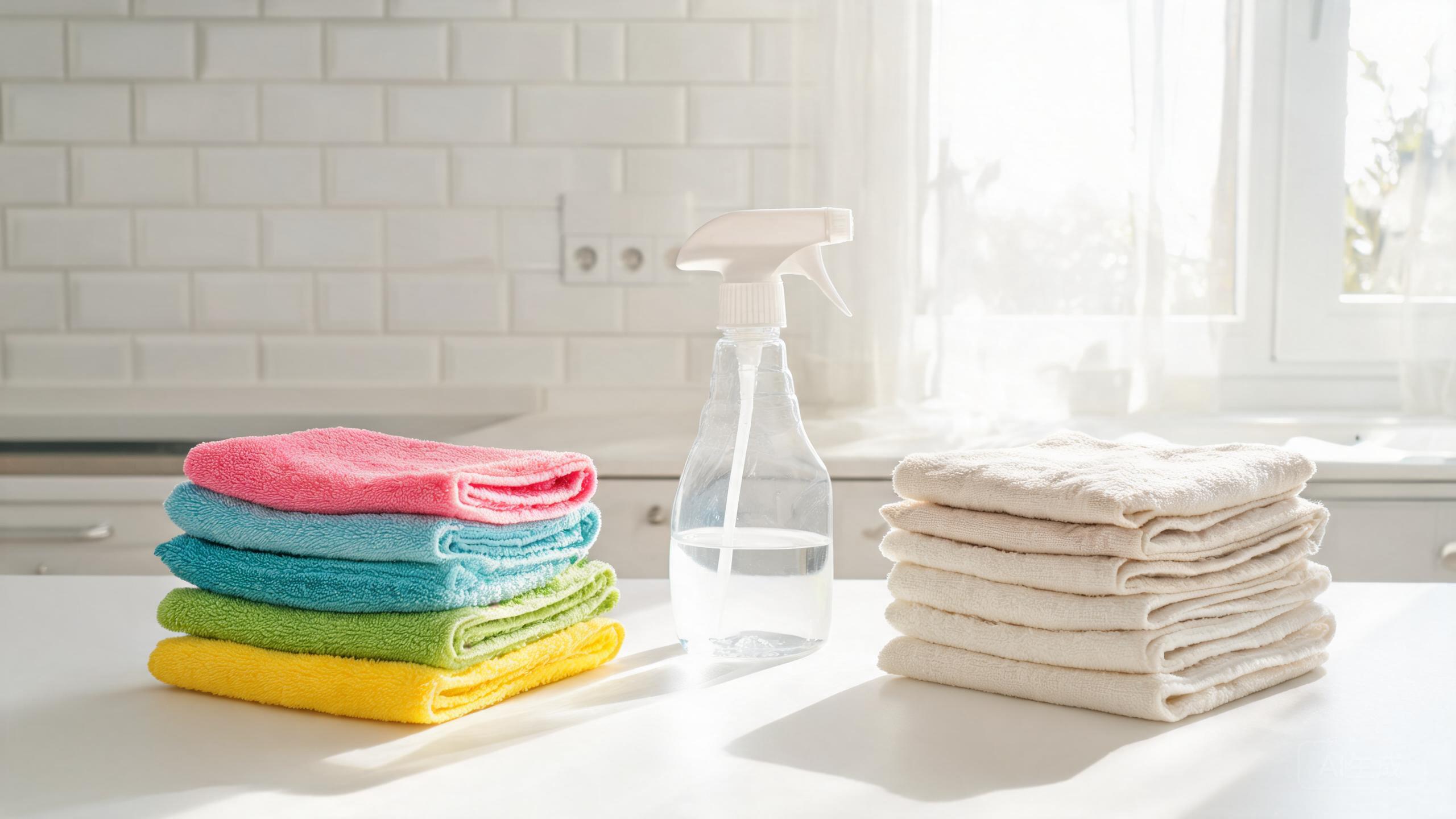
If you have ever wondered whether to reach for a microfiber cloth or an old cotton t-shirt rag, you are not alone. Both clean, but they work in fundamentally different ways — and using the right one for each task makes cleaning faster and more effective.
How Microfiber Works
Microfiber is a synthetic blend of polyester and polyamide fibers, each thinner than a human hair. The fibers are split into microscopic wedges that scrape dirt and trap it within the fiber structure. This is why microfiber can pick up grease, dust, and bacteria with just water.
Studies show quality microfiber removes up to 98 percent of bacteria from surfaces using only water, compared to about 30 percent for cotton rags.
How Cotton Works
Cotton is a natural fiber that absorbs liquid well but does not trap particles at the microscopic level. It is excellent for soaking up spills and wiping away visible messes, but it tends to push fine dust and bacteria around rather than capturing them.
Where cotton shines is in scrubbing. A textured cotton rag has more friction than flat microfiber, making it better for stuck-on food and tough stains.
When to Use Microfiber
- Glass and mirrors: Microfiber leaves no lint or streaks.
- Dusting: Microfiber traps dust instead of scattering it.
- Stainless steel: A damp microfiber cloth removes fingerprints and leaves a streak-free shine.
- Bathroom surfaces: Microfiber removes soap scum with minimal cleaner.
- Eyeglasses and screens: Specialized fine microfiber is the only safe option.
When to Use Cotton Rags
- Heavy spills: Cotton absorbs more liquid per square inch.
- Scrubbing baked-on food: Textured cotton provides the friction needed.
- Greasy messes: Cotton can be used with degreaser and then laundered.
- Painting and staining: Cotton rags are better for applying wood finishes.
Cost Comparison
Quality microfiber cloths cost $1 to $3 each and last 200 to 300 washes. Cotton rags are essentially free if you repurpose old t-shirts and towels. The most cost-effective approach is investing in a set of microfiber cloths for daily cleaning and keeping cotton rags for messy jobs.
How to Care for Microfiber
The golden rule: never use fabric softener. Fabric softener coats the fibers and destroys their cleaning ability permanently. Wash in warm water with mild detergent, and air dry or tumble dry on low. High heat melts the synthetic fibers. Wash microfiber separately from cotton.
Color-Code Your Cloths
Professional cleaners use a color-coding system: blue for glass, green for general surfaces, red for bathrooms, yellow for kitchen. This prevents cross-contamination.
The Verdict
For everyday surface cleaning, dusting, and glass, microfiber is clearly superior. For heavy scrubbing, grease, and disposable messy jobs, cotton rags are more practical. A well-stocked cleaning kit includes both.